
Seeking the "Tactile Feel" of the Field through Ethnographic Insights into the Intangible
Laboratory on Service Design Anthropology
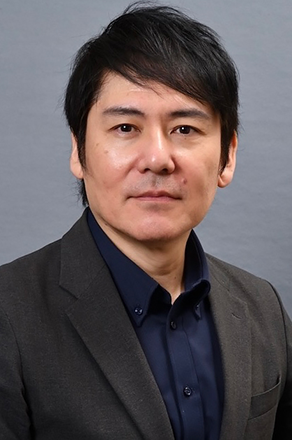
Professor:ITO Yasunobu
E-mail:
[Research areas]
Cultural Anthropology, Sociology of Knowledge, Ethnography
[Keywords]
Business Anthropology, Service Design Anthropology, Medical Anthropology, Science and Technology Studies (STS)
Skills and Background we are looking for in Prospective Students
We welcome students from all academic backgrounds. No specific prior knowledge of anthropology is required. What we value most is a "readiness to embrace complexity"—an intellectual curiosity to look beyond conventional, linear solutions and engage with the multifaceted realities of modern society.
What you can expect to learn in this laboratory
Our laboratory researches the knowledge within various communities and organisations from a social scientific perspective (primarily cultural anthropology and sociology). Students will develop the ability to grasp social phenomena analytically and acquire advanced ethnographic research skills. In corporations, hospitals, schools, and research laboratories, there exist many things taken for granted—undisputable knowledge that often goes unquestioned. We describe and analyse these through ethnography, utilising methods of "defamiliarisation" and "reframing". Ethnography is invaluable for discovering latent needs at the field site and providing insights by uncovering the hidden, unmet needs of consumers in their daily lives. To this end, ethnography is highly prized in business and engineering design, leading to the recruitment of ethnographers by large corporations across Japan and North America. Students will cultivate these essential skills within our lab.
【Job category of graduates】 Sales engineering, Consulting, Marketing Research, and UX Design
Research outline
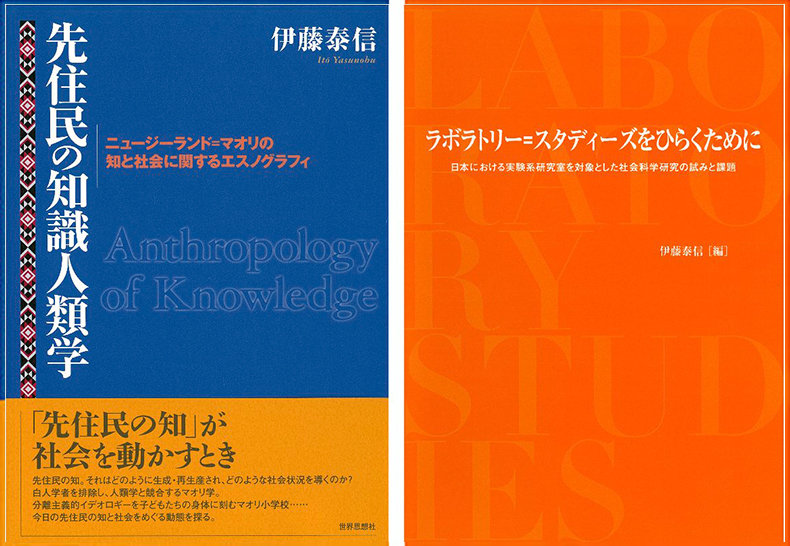
(Left) ITO, Yasunobu, 2007, An Anthropology of Knowledge of An Indigenous People: A New Zealand Maori Knowledge and Society Ethnography. Sekaishisosya Press (The Japanese Society for Oceanic Studies Award for Best Publication by Young Scholars of the Year)
(Right) Ann Jordan, 2025, Business Anthropology (2nd ed.), Japanese translation by Yasunobu ITO et al., Nakanishiya Shuppan.
Ethnography:
Although ethnography (field-oriented qualitative research) was originally a methodology used by cultural anthropologists for the detailed investigation of simple traditional societies, it is currently widely implemented in the fields of business administration, medicine, nursing, and research in science and technology. Recently, for instance, industries and businesses have been utilising ethnography to uncover consumer insights within their marketing research. While cultural anthropologists have previously been somewhat hesitant to apply ethnography in business contexts, if the anthropological method is to become useful in the truest sense within industry, it is essential to optimise ethnography on both academic and practical levels. Students should approach their research with this in mind: contributing to society while pioneering untapped potentials in ethnography are equally significant goals.
Unique Study of Cultural Anthropology in an Interdisciplinary Environment:
In Japan, many graduate schools teach cultural anthropology and sociology in the strict sense. However, JAIST offers a graduate course where undergraduate majors are not a barrier to entry, providing an anthropological study within an interdisciplinary environment where students can achieve unique research results unlike those of any other university. For example, a student with a background in science or engineering may apply their undergraduate knowledge to a manufacturing plant, organising ethnographic research to identify field-site issues. Such attempts hold the potential to produce original ethnographic research that would not be possible for those who have only specialised in anthropology or sociology.
Key Publications
- ANDO, Masaya and Yasunobu ITO, 2022, Conceptual Change in Human-centered Design by Artificial Intelligence System. In: Christine Leitner et al. (eds) The Human Side of Service Engineering, 62: 143–151.
- ITO, Yasunobu, 2019, Contact Zone of Anthropology of and in Business: Inspiring Synergy between Anthropology and Industry in Japan. Japanese Review of Cultural Anthropology 20(2): 7-25.
- ITO, Yasunobu, 2016, “Ethnography” in Japanese Corporate Activities: A Meta-anthropological Observation on the Relationship Between Anthropology and the Outside, H Nakamaki et al. (eds) Enterprise as an Instrument of Civilization, Springer, 55-72.
Teaching policy
Whether you are a researcher or professional, thinking outside the box is a challenge. Our lab uses ethnography to "unwind" preconceived thoughts and reframe perspectives through a sociological lens.
Students master fieldwork to uncover latent needs and the "tactile feel" of diverse social settings—from corporations to hospitals. By reviewing core literature and practicing "defamiliarisation," we cultivate versatile experts capable of discovering human insights in complex modern societies.